From looking up documentation to delegating work: a year with AI
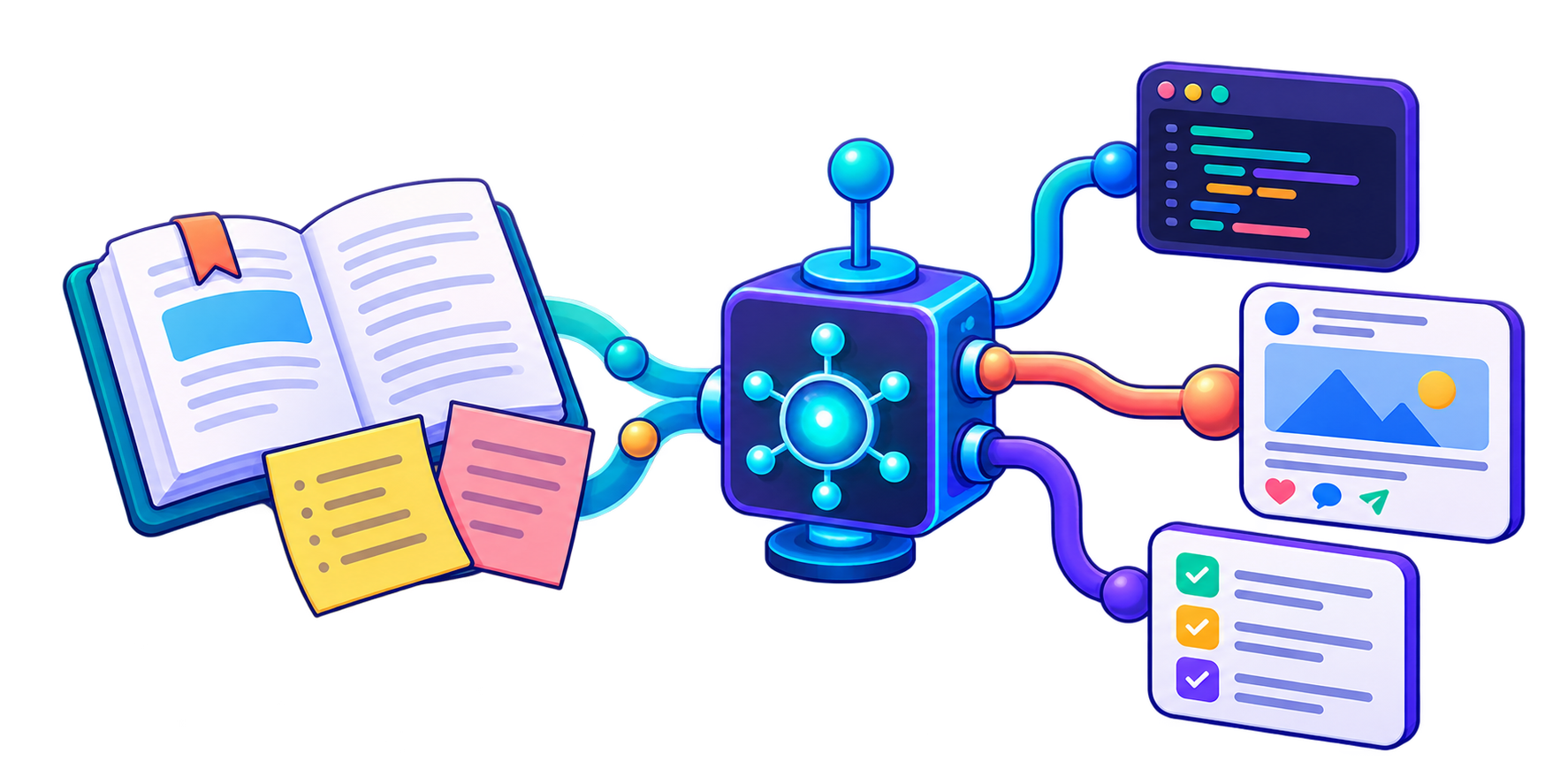
A year ago, looking up documentation and examples was a regular part of my work. If I had a question about a library, an API, or a way to solve a problem, I would open the documentation, compare my options, and apply what I had learned to the project.
I still look things up. What has changed over the past year is everything around that search. AI has gone from helping me find an answer to taking part in much larger tasks. That has changed what I need to bring to the work, too.
From asking questions to providing context
At first, using AI seemed simple: ask a question and read the answer. But a single question usually gets you a single answer. For AI to be genuinely useful, I need to explain what I am trying to achieve, give it the project’s context, and make its constraints clear.
I have had to learn how to write more complex prompts. Not because there is a magic phrase, but because getting a useful result means thinking more clearly about the problem. I need to describe the goal, share the relevant information, and explain how I will know whether the answer works.
That preparation changes the way I work. Instead of searching for each piece of information separately, I can describe a task with its context and ask for help with several steps in the process. Then I check the proposal, make corrections, and decide what to keep.
From a prompt to a workflow
The next step has been to stop thinking only in terms of prompts and start thinking about workflows. Tools and plugins like Wingspan help structure the work: first understand what needs to be done, then turn it into a plan, and finally carry it out.
I no longer use AI only for one-off answers. I can give it a broader task and work through it in stages. That does not remove the need to understand the project or review the changes. It shifts some of the effort: I spend less time producing every step myself and more time defining the outcome and checking the work.
I have also started building MCPs to connect AI to tools and recurring tasks in my day-to-day work. That gives it access to relevant context or lets it take useful actions as part of a workflow, instead of limiting it to whatever fits in a conversation. When a task comes up repeatedly, connecting the tools I need makes it easier to delegate.
The change reaches my own projects, too
What I learn at work does not stay at work. On OpoSAS, my personal project, I delegate most of the development work to AI. I also use it to help manage the project’s social media.
Delegating does not mean walking away. I still supervise what gets prepared and decide what gets published. AI can help move tasks forward while I work on something else, but the judgment about the product and responsibility for the result are still mine.
For me, being able to work on several things in parallel is one of the most visible changes. I can leave one task running and focus on another part of the project, instead of doing every step myself from beginning to end. Then I come back, review what was produced, and decide what to do next.
My work has not disappeared, it has shifted
It is easy to measure the impact of these tools by the amount of code or text they generate, or by the number of proposals they produce. In my day-to-day work, the bigger change is where I put my attention.
Before, a large part of the effort could go into finding information and manually carrying out each step. Now I spend more time explaining the problem, deciding what is worth delegating, and checking whether the result fits. AI can speed up execution, but it cannot decide on its own what matters in my project or when something is ready.
That is why supervision is not just a final check. It is part of the work from the beginning: provide good context, break down the task sensibly, and check what comes back. The more I can delegate, the more important it is to keep a clear view of what I am building.
A year ago, I thought of AI mostly as a quick way to answer questions. Now I also see it as a way to organize and get work done, both with a team and on my own projects. I am still learning which tasks are worth delegating and how far to automate each one. That is the question I am thinking about now, more than which prompt to write.